Remote Sensing Research
Summary
Throughout the 2021-2022 academic year I decided to engage in Remote Sensing research after becoming interested in the topic from a previous project. In looking for a potential research question I came upon the problem of bark beetle infestations and their early and precise detection in European forests. Looking further into the problem in the context of Latvia, I had the idea of analyzing whether a certain publicly available image dataset could be potentially used to detect infested trees with higher spatial resolution.
Indeed, my final project and paper revolved around creating a computer model to classify/detect infested areas using this novel dataset and to analyze the respective results and viability of the method.
Here is a slightly more detailed summary and the paper itself. Most code developed during the project can be viewed on my Github.
Results
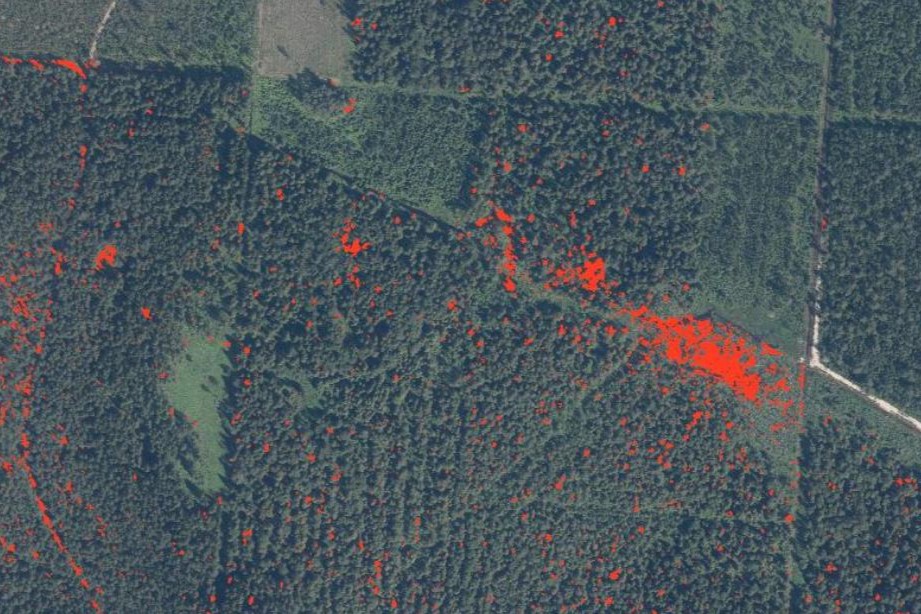
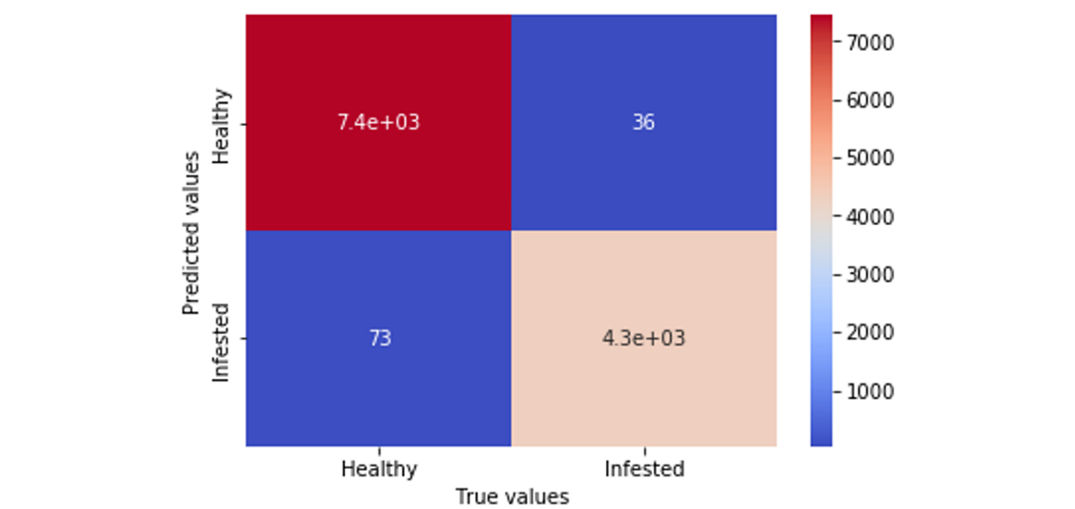
The developed algorithmic model was able to discriminate between healthy and red-attacked trees on a pixel by-pixel basis with an accuracy of 99% for the study area. The study highlighted the potential use of such local remote sensing imagery – which many European countries currently produce - as an effective tool for red-attack stage bark beetle outbreak identification.
Additionally, it highlights the necessity of increased temporal resolution of this data, as well as more detailed in-situ data for future implementation and augmentation of this method in Latvia.
A confusion matrix on the test data of the resulting model can be seen below:
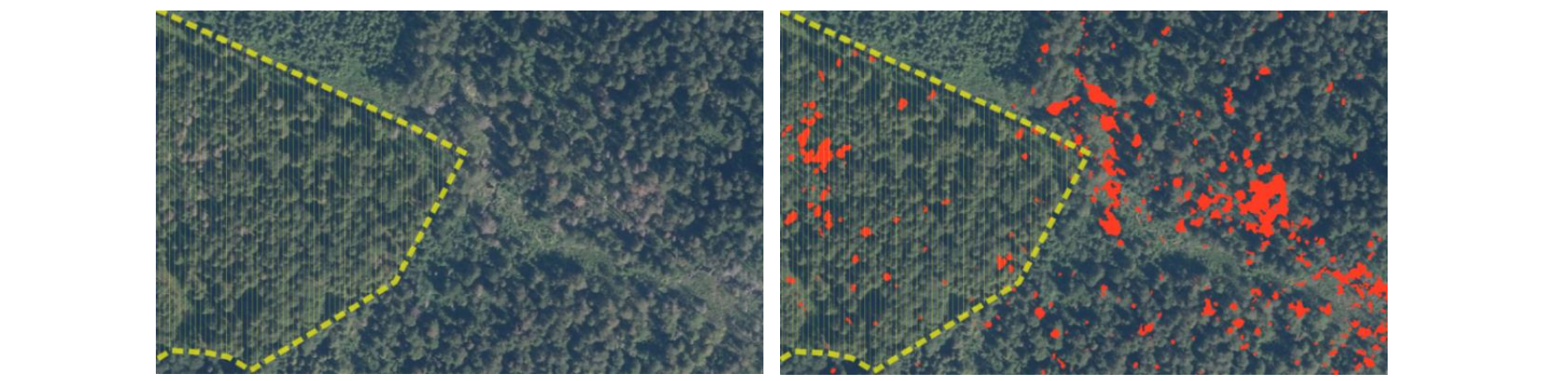
As well as a close up of a specific region of the study area, showing the surveyed bark beetle damage areas (yellow dotted line) and the bark beetle red-attack areas identified by the model (red):
Other
The study received a perfect score and the highest award in the National Research Competition under the category Earth and Environmental Sciences and was chosen to represent Latvia at the EU Contest for Young Scientists 2022 (EUCYS2022) in which it received the Natural Biodiversity Award 2022.
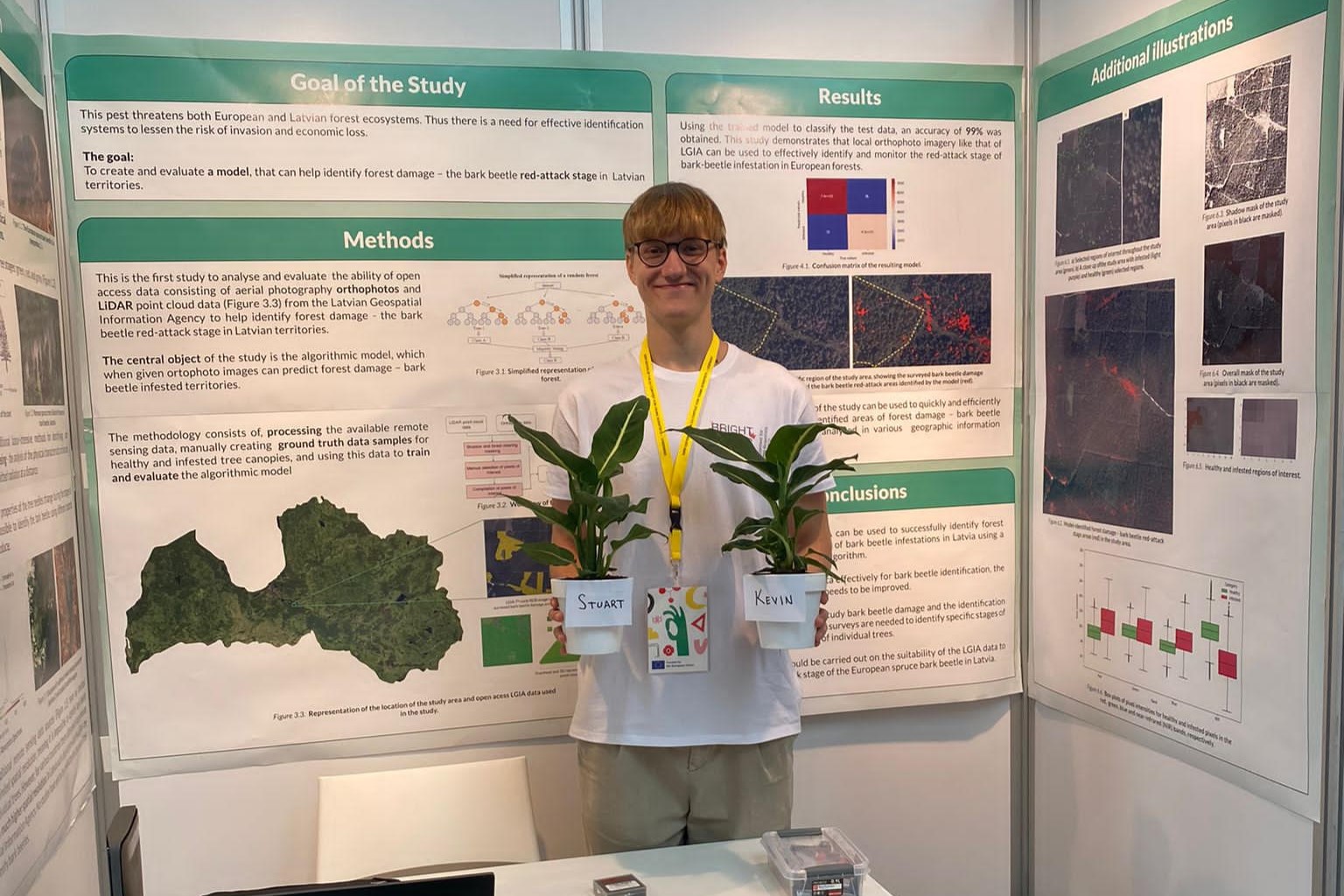
If you've scrolled so far down, as a reward, here is me posing at my research booth with my two colleagues Stuart and Kevin:
A special thank you goes out to my physics teacher Elza Līna Liniņa for her help in reviewing the paper and my scientific consultant Dr. Juris Siņica-Siņavskis who helped answer any questions I had regarding existing approaches and provided feedback on my paper.